
Pittsburgh, Pennsylvania
Mold and Water Damage Help in Pittsburgh
Musty basement, dark spots on attic wood, a wet wall or a ceiling stain that keeps coming back. Find out what it probably is, then talk it through with a local mold and water damage specialist.
- Describe it to a local mold specialist
- Older Pittsburgh basements and attics
- Moisture source before anything else
- Plain advice on when a test is worth it
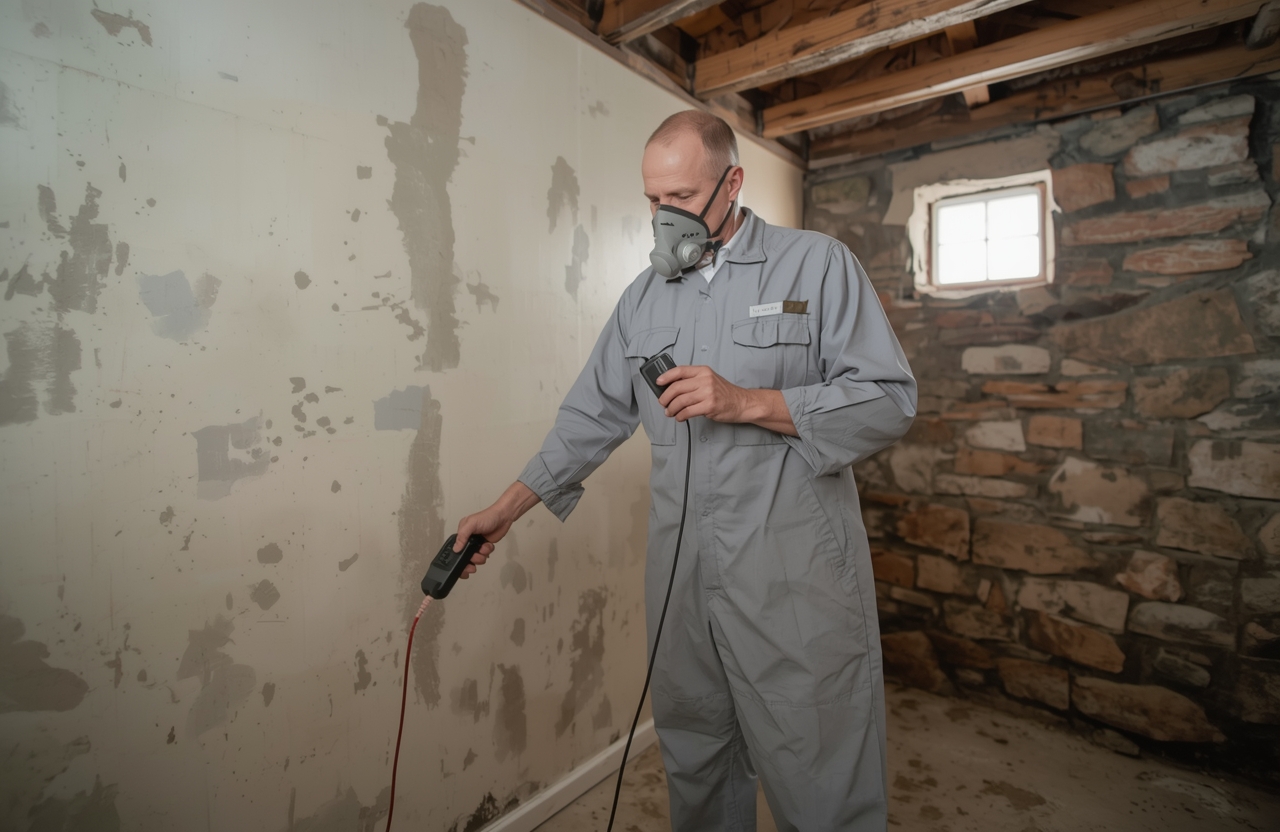
Mold removal, inspection and water damage help
Mold Removal & Remediation
Containment, filtered air, removal of what cannot be saved and cleaning, after the moisture problem is fixed.
Mold Inspection & Testing
A visual check and moisture readings first, then air or surface samples only when they answer a real question.
Basement Mold Removal
Stone and block foundations, old floor drains, finished walls and the damp that keeps coming back.
Attic Mold Removal
Dark roof sheathing from winter condensation, bath fans vented into the attic and slow roof leaks.
Water Damage Restoration
Drying out after a leak, burst pipe or basement flood so mold does not get the chance to start.
Pittsburgh Mold & Water is a mold removal, mold inspection and water damage information site for Pittsburgh and the surrounding Allegheny County suburbs. When you call the number on the page, your request goes to an independent local company that talks it through, quotes the job and does the work.
Mold needs water, so nearly every mold problem is a water problem first. Pittsburgh makes that easy to believe. The city and its suburbs are built on steep hills, many houses sit on stone, brick or block foundations that are close to a century old, and winters and humid summers both put moisture into attics and basements. Cleaning mold without finding the water is the most common mistake, and it is why the first question on any call is where the moisture comes from.
How a mold call usually goes
- 1
You call and describe it
What you see or smell, where, for how long, and whether water has ever come in there. Owning, renting or buying changes what comes next.
- 2
Find where the water comes from
A meter and a careful look at the wall, joists and drain. Mold is a symptom; wet material is the cause.
- 3
Test only when it helps
A lab sample answers questions a look cannot, such as hidden growth or a check after the work. It does not need to confirm mold you can already see.
- 4
Agree the scope in writing
What is coming out, how the area is sealed off and what it costs, before any work begins.
- 5
Fix, clean and recheck
Moisture repair, removal, cleaning and a final look, with a clearance test on larger jobs by someone who is not the remover.
Water and mold go together
Most mold starts with water that stayed too long: a burst pipe, a seeping foundation, a leaking roof or a flooded basement. That is why this site covers both. Water damage restoration explains the first 48 hours and how drying works, and the guide on mold after a basement flood is the day-by-day version. Dry material does not grow mold, so the drying comes first and the mold work, if any is needed, follows.
What are you seeing?
- A musty smell in the basement and nothing visible: start with mold inspection and testing, which finds hidden damp with a meter, and read the guide on basement mold in older Pittsburgh homes.
- Fuzzy or dark growth on basement walls, joists or a finished lower level: basement mold removal covers causes, fixes and what comes out.
- Dark speckling on the underside of the roof, frost on nails in winter or a stained bathroom ceiling: attic mold removal.
- Mold you can see and want gone: mold removal and remediation explains the steps, from sealing the area to checking the work.
- A leak, burst pipe or basement flood that is still wet: water damage restoration and the day-by-day guide on mold after a basement flood.
- You are buying or selling a house: mold when you buy or sell a house.
Honest about testing and about DIY
Most Pittsburgh homeowners do not need a lab test to confirm mold they can already see, and the EPA agrees that sampling is often unnecessary when growth is visible. A patch under about ten square feet on a hard surface can often be cleaned by the homeowner with detergent, gloves and a respirator. The pages here say so, and they also say where a professional is worth paying: mold in drywall or insulation, mold you smell but cannot find, anything larger than a few square feet and anything involving someone in the house who is sensitive to mold.
Pennsylvania has no mold license
Pennsylvania does not license mold inspectors or mold removal companies. That is why this site spends time on what to ask instead: which industry credentials the crew holds, a written scope and contract, proof of liability insurance and the Attorney General registration number the state's home improvement law requires of most contractors. Nothing on this site claims a license, certification or insurance for anyone.
Where the help covers
The city of Pittsburgh itself, and the South Hills, North Hills and eastern suburbs of Allegheny County. The service areas page has local notes on the housing and the moisture habits of each town, including Mt. Lebanon, Bethel Park, Monroeville, Penn Hills and Ross Township.
Guides
Three longer guides go beyond the service pages: basement mold in older Pittsburgh homes, mold after a basement flood and mold when you buy or sell a house.
What a sound mold job looks like
- Water before mold. Cleaning mold off a wall that is still getting wet only buys a few months.
- Sealed work area. Plastic barriers and filtered air machines keep spores from drifting through the rest of the house.
- Straight talk on testing. Visible mold rarely needs a lab to prove it is mold. Testing is for what you cannot see.
- Written scope and photos. Ask for both. A job with no paper trail is hard to judge afterward.
Pittsburgh and the surrounding suburbs
Mold inspection and removal in the city and in the South Hills, North Hills and eastern suburbs of Allegheny County.
Frequently asked questions
Do I need to test for mold?
Often not. If you can see mold, you know it is there, and the EPA says sampling is often unnecessary. Testing helps when you smell mold but cannot find it, when you need documentation for a sale, a dispute or a claim, or when you want a check after a large removal. See mold inspection and testing.
Can I clean mold myself?
A patch smaller than about ten square feet on a hard surface can usually be cleaned with detergent and water, with gloves, eye protection and an N95 respirator, if nobody at home is sensitive to mold. Mold in drywall, insulation or carpet, larger areas and mold that returns need more than a scrub brush. See mold removal.
Does Pennsylvania license mold inspectors or removal companies?
No. Pennsylvania has no state license for mold inspection or remediation. Ask for industry credentials you can verify, a written scope and contract and proof of liability insurance. Pennsylvania's Home Improvement Consumer Protection Act requires most home improvement contractors to register with the Attorney General; ask for the registration number.
Is black mold more dangerous?
Color does not identify a mold, and plenty of harmless molds are dark. The CDC does not recommend identifying the species in a home, because the cleanup is the same. Anyone with asthma, allergies or a weakened immune system should stay away from disturbed mold. Medical questions belong with a doctor.
Seeing mold or water damage? Talk it through first.
One call connects you with an independent local mold and water damage specialist for the Pittsburgh area.