
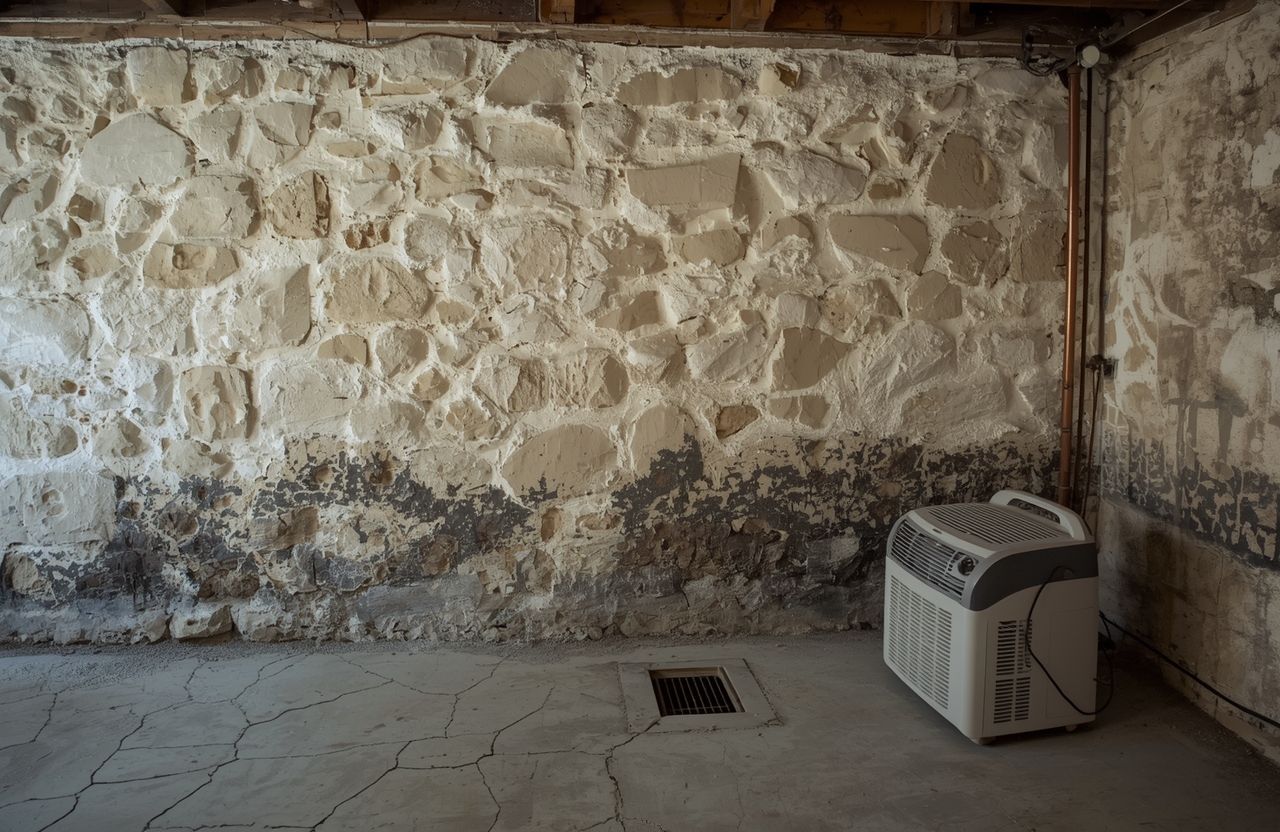
The basement is the most common place for mold in a Pittsburgh house, and for good reason. Many homes here were built on hillsides, on stone or block foundations that were never meant to be a finished living space, and a basement is the lowest, coolest and often dampest room in the building. This page explains why basements here grow mold, how to work out which kind of moisture you have, what basement mold removal actually involves and what keeps the problem from returning.
If you are comparing whether to test, mold inspection and testing explains when a test helps. For the general steps of any mold job, see mold removal. If the basement flooded, read what to do after a basement flood first, because the first two days decide whether mold starts.
What it looks like
Basement mold shows up in a few recognizable ways:
- Dark or fuzzy spots on the lower part of painted walls, on baseboards or at the bottom of paneling.
- A musty smell that gets stronger in summer or after rain, even when you see nothing.
- Stains on stored cardboard, a tide line on the wall, or paint peeling in sheets.
- Black or green growth on wood framing, joists or the underside of the first floor.
- Carpet or an area rug that never quite dries, or a finished room with a sour smell behind the drywall.
- White, chalky crust on concrete, block or stone. That crust is mineral salt left when water moves through masonry and evaporates. It is not mold, but it tells you water is moving through the wall.
Where the water comes from
Fixing a basement means identifying the source. In this area, these are the usual suspects, roughly from most to least common.
Groundwater pressure and seepage. Soil that stays wet pushes water through the wall and up through the floor joint. Hillside lots can have water running downhill toward the uphill foundation wall after heavy rain, snowmelt or a wet week. Old rubble stone walls have open joints, and unreinforced block and old brick are porous.
Roof and surface drainage. Clogged gutters overflow at the foundation. Downspouts that discharge at the wall put roof water exactly where you do not want it. A patio, walk or driveway that slopes toward the house sends surface water to the wall. Flower beds and mulch that hold water against a wall do the same.
Window wells. A well with no cover or a blocked drain fills with rain and leaks around the window frame. Many older basements have wells that were never drained at all.
Condensation from humid air. Summer air in this region is humid, and a cool concrete wall or cold water pipe pulls moisture out of it the same way a cold drink glass does. The wall looks wet, nothing is leaking, and mold grows on the surface. This is common in unfinished basements with no dehumidifier and in rooms closed off with poor air movement.
Plumbing leaks and appliances. A slow drip from a supply line, a water heater, a washer hose, a condensate line from a furnace or an air conditioner, or a failed drain pipe can soak a wall that looks like seepage.
Drains and sewer connections. Floor drains with a dry trap let sewer gas into a basement, and in older sections of the city and inner suburbs sewers can back up in a heavy storm. Sewage backup is its own category: contaminated water is not the same job as clean water, and it needs different handling and safety measures.
Radon and sealing. Pennsylvania has high radon levels in many areas, and some houses have a radon fan and pipe through the slab. These systems reduce soil gas and do not cause mold, but taping and sealing a basement for radon can leave humid air trapped if no dehumidifier is added.
Telling seepage, condensation and leaks apart
A few cheap checks narrow it down before anyone spends money.
The foil test. Tape a square of aluminum foil, about a foot across, firmly to a bare wall or floor with every edge sealed, and leave it for a day or two. Moisture on the room side of the foil means condensation from the air. Moisture under the foil, on the wall side, means the water is coming through the masonry.
Timing. Dampness that appears a day or two after rain, low on the wall, points to seepage or drainage. Dampness worst in July and August and dry in January points to humidity. A wet spot unconnected to weather points to plumbing.
Location. A wet area under a bathroom or kitchen is a leak until proven otherwise. A wet corner below a downspout is a drainage problem. A uniformly damp lower wall around the room is groundwater.
A humidity meter. A cheap hygrometer in the basement tells you whether humidity sits above the 60 percent level the EPA associates with mold growth. Aim for 30 to 50 percent.
Fix the outside first
Exterior fixes are often the cheapest and most effective, and they come before anything done inside.
- Clean gutters and make sure they are large enough for the roof.
- Extend downspouts several feet from the foundation, or carry them away in a buried pipe that drains downhill.
- Regrade soil so it slopes away from the house, and redirect paved surfaces away from the wall.
- Cover window wells and make sure they drain.
- Fix leaks in the roof and flashing before they soak the walls.
Many dry-basement problems end here. Others need drainage work inside.
Inside: sump pumps, drains and dehumidifiers
A sump pit and pump moves water out before it reaches the floor. Pumps fail, often in the storm that needs them most. Check that the pit is clear, the float moves freely, the discharge pipe carries water away from the house and, ideally, that a battery backup exists for power outages. A sealed pit lid reduces humidity.
For recurring seepage, a contractor can discuss interior drain tile, a sump pit and a vapor barrier on the wall, or exterior waterproofing. These jobs are the realm of waterproofing contractors, not mold specialists, and they can cost thousands of dollars. Get more than one opinion and ask why the proposed system fits your wall and floor. Be cautious about paint-on waterproofing sold as a fix for an actively seeping wall, since it can trap moisture behind it and fail.
A dehumidifier sized for the space, with a hose to a floor drain or pump, is often the single most useful addition for condensation and general dampness. Run it continuously during humid months and check the humidity reading.
What basement mold removal involves
The steps are the same as any mold job, described on the mold removal page, with a few basement specifics.
Containment and air filtration. The basement is sealed from the stairway and the first floor with plastic and tape. The first floor is protected from dust moving up the stairs, and heating and air system registers in the basement are covered. A filtered air machine pulls air from the work area.
What comes out. Drywall, paneling and insulation on exterior walls with growth are cut out, usually a foot or two above the visible stain or the water line. Carpet and pad that stayed damp are removed. Wood furring strips attached to masonry are usually removed and not reinstalled against bare stone or block.
What is cleaned. Concrete, block, brick and stone are cleaned, then dried. Floor joists and framing are brushed or sanded and HEPA vacuumed.
Contents. Cardboard and paper goods that grew mold go out. Hard goods can be cleaned. Photograph anything discarded if an insurance claim is possible.
Drying and the moisture fix. The space is dried to a normal reading, and the water source is dealt with before any wall is rebuilt. Closing a wall while a block or stone wall still reads wet is how the job is repeated.
Rebuild. Rebuilding is a separate trade. A better rebuild leaves a gap or uses materials that tolerate moisture on exterior walls, such as inorganic panels, rather than putting paper-faced drywall tight against a masonry wall.
Finished basements and older construction
Finished basements hide problems. Carpet laid directly on a concrete slab holds moisture against it. Drywall framed against a masonry wall has no air gap and no way to dry, and mold can grow behind it for years before anyone sees a spot. If a finished basement smells musty and nothing shows, the specialist may open a small hole in a lower wall to check the cavity with a meter or a borescope.
Older Pittsburgh houses sometimes have a former coal room, a dirt-floor cellar later covered with a thin concrete skim, a rough stone foundation or a mix of old and new additions with different materials. Each behaves differently. A thin slab laid over damp earth can show moisture at its edges and cracks. A stone wall wicks water from below. The inspection should read all of them, not only the wall that looks worst.
Asbestos and lead in older basements
If the house was built before the late 1970s, the basement may have pipe wrap, furnace insulation, floor tile or ceiling material that contains asbestos, and painted trim or old paint on walls that contains lead. Cutting out or sanding those materials without precautions spreads them. A responsible company asks the age of the house and checks suspect material before demolition, and the Allegheny County Health Department enforces asbestos rules for renovation and demolition in the county. It is much easier to have this discussion before anything is torn out.
Sewage is a different job
If the water that came in was from a sewer backup, a toilet overflow or floodwater, it carries bacteria and other contaminants that clean water from a pipe does not. Porous materials that touched it are usually discarded, hard surfaces are cleaned and disinfected, and the crew uses more protective equipment. Tell the specialist at the start what kind of water it was.
What it costs, in general terms
A small patch of mold on a wall can be cleaned for a few hundred dollars, while a basement with demolition, containment, air filtration and drying can run into the thousands. The waterproofing and the rebuild are usually separate from the mold work. The specialist quotes after seeing the space, and any quote should list the scope, the square footage and what is included. Be cautious of a flat price quoted by phone without seeing the basement.
How to keep it from returning
- Keep humidity at 30 to 50 percent with a dehumidifier and a hygrometer to check it.
- Keep gutters clean, downspouts discharging away from the wall and grade sloping away.
- Do not store paper, cardboard or fabric against exterior walls, and use plastic bins on shelves with a gap from the wall.
- Do not finish a damp basement without fixing the water and leaving the wall able to dry.
- Check the sump pump twice a year and before major storms.
- Fix plumbing leaks promptly.
- Look at the lower walls after heavy rain for the first sign of dampness.
Related pages
If water came in, water damage restoration covers drying and what to do in the first days. The guide on basement mold in older Pittsburgh homes goes deeper into stone and brick foundations, and the service areas page has notes for suburbs across the South Hills, the North Hills and the eastern side of the county.