
Service areas
Mold Help Across Pittsburgh and Its Suburbs
Seven towns around the city, each with its own housing stock and its own ways of getting wet.
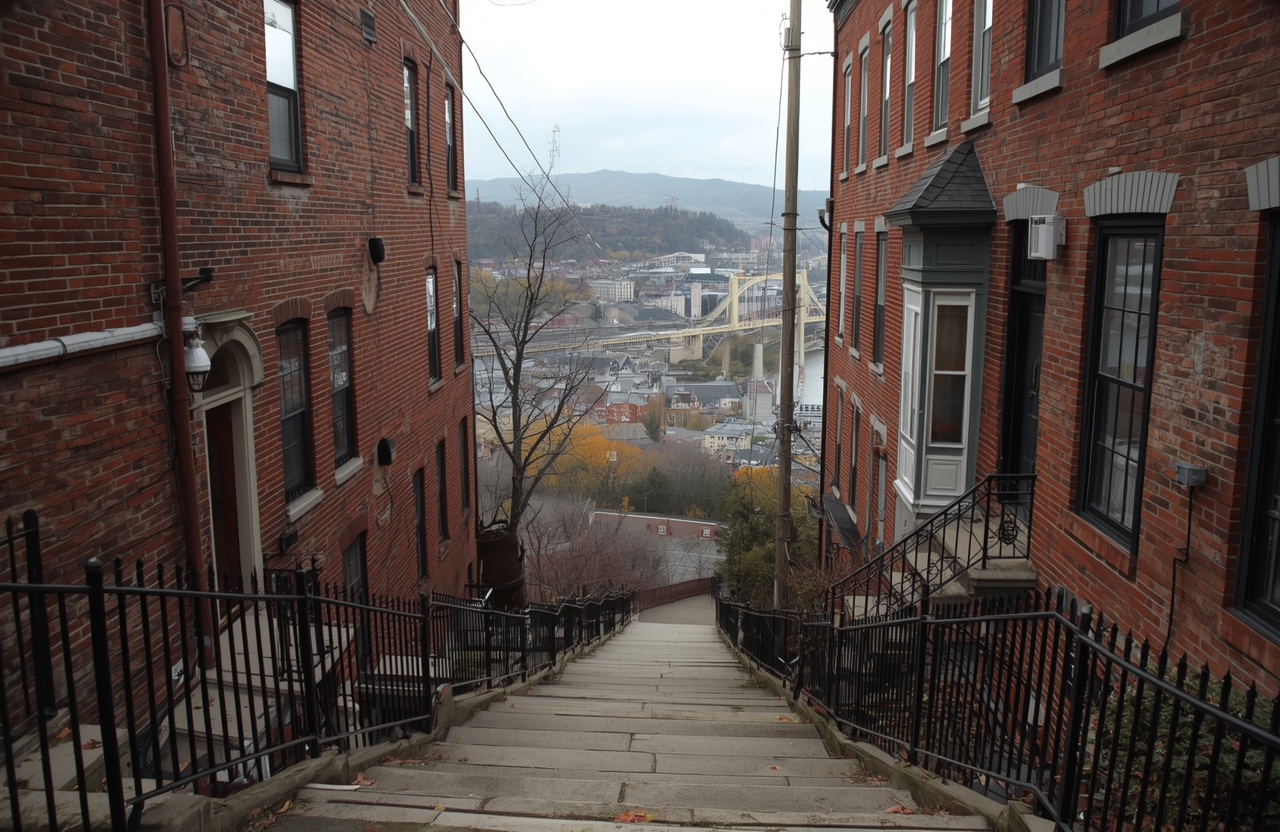
Mold depends on the house, and houses around Pittsburgh vary a great deal. A 1920s brick house in Mt. Lebanon, a 1960s split-level on a Bethel Park hillside, a townhouse in Ross Township and a wooded 1980s house in McCandless have different basements, attics and moisture habits. Each town page covers what is typical there.
Pittsburgh itself is covered on the home page and the service pages. The town pages below describe the suburbs in the South Hills, the eastern suburbs and the North Hills. Pick your town for local detail, or go to all services if you already know what you need. If your town is not listed, call anyway. Nearby addresses may still be covered.
South Hills
Mt. Lebanon, PA
Streetcar-era brick, stone and stucco houses, plaster walls, slate roofs and basements that were finished in the 1950s and 1960s.
Bethel Park, PA
Postwar ranches, split-levels and bi-levels built into slopes, with lower-level family rooms and drainage that depends on the grade.
Upper St. Clair, PA
Larger houses from the 1970s to the 1990s on hillside lots, with finished lower levels, tight construction and wall details that can hide leaks.
Eastern suburbs
Monroeville, PA
Postwar split-levels and ranches, townhomes and condos with shared walls, and lower-lying homes near the creek valleys.
Penn Hills, PA
Mid-century brick ranches and Cape Cods on steep lots, now at the age where roofs, drains and water heaters fail.
North Hills
Ross Township, PA
Older houses near the city line, postwar streets and newer townhouse communities with finished lower levels.
McCandless, PA
Wooded lots, houses from the 1960s to the 1990s, walkout lower levels and shade that keeps the outside of a house damp.
Services in every covered town
Mold Removal & Remediation
Containment, filtered air, removal of what cannot be saved and cleaning, after the moisture problem is fixed.
Mold Inspection & Testing
A visual check and moisture readings first, then air or surface samples only when they answer a real question.
Basement Mold Removal
Stone and block foundations, old floor drains, finished walls and the damp that keeps coming back.
Attic Mold Removal
Dark roof sheathing from winter condensation, bath fans vented into the attic and slow roof leaks.
Water Damage Restoration
Drying out after a leak, burst pipe or basement flood so mold does not get the chance to start.
Seeing mold or water damage? Talk it through first.
One call connects you with an independent local mold and water damage specialist for the Pittsburgh area.